The short answer
US homes split almost evenly: in the 2020 Residential Energy Consumption Survey, 48% heated water mainly with natural gas and 46% with electricity. Gas tankless units hold more flow at a cold winter rise but need a gas line sized for the load and venting. Electric tankless units need no vent and no gas but draw 75 to 150 amps in whole-house sizes, and their flow falls faster as the inlet water gets colder.
Flow at a winter rise
| Unit | GPM |
|---|---|
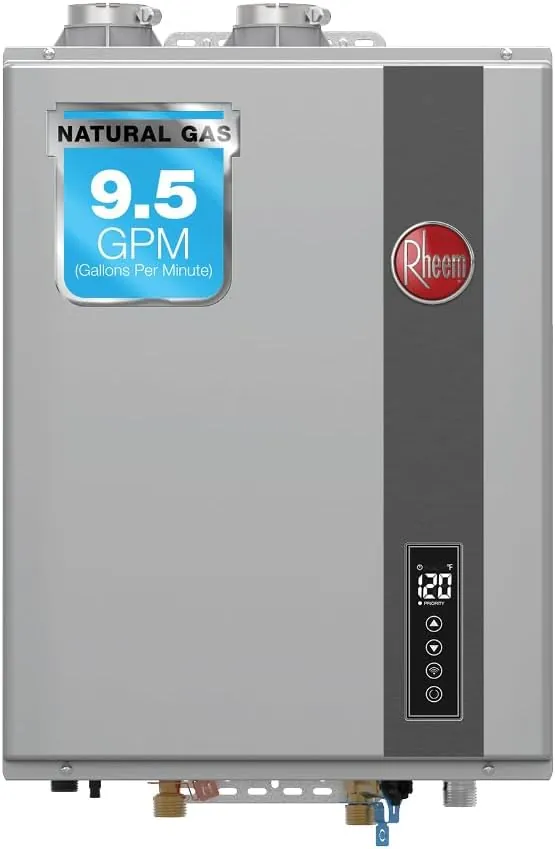
| 199,000 BTU condensing gas | 5.4 |
| 150,000 BTU non-condensing gas | 3.3 |
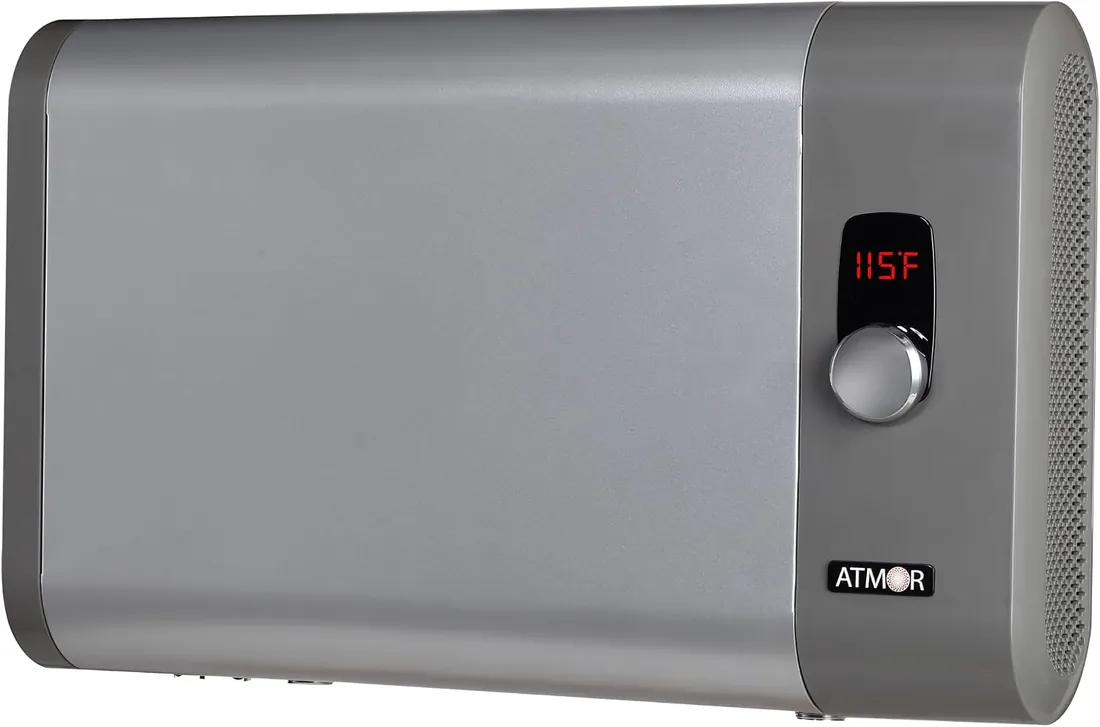
| 36 kW electric | 3.5 |
| 27 kW electric | 2.6 |
| 18 kW electric | 1.8 |
Installation
- Gas: line sized for the input (a 199,000 BTU unit burns about 192 cubic feet of natural gas an hour), venting, and a combustion-air path.
- Electric: dedicated 240-volt circuits, often two to four double-pole breakers, and enough service capacity.
Who fits which
- Cold climate, two or more showers at once, gas at the house: gas.
- Mild climate, one or two fixtures at once, no gas, a panel with spare capacity: electric.
- One far sink: neither; a point-of-use unit.
Products mentioned
Questions readers ask
Is gas or electric tankless cheaper to run?
It depends on local gas and electricity prices; compare your utility rates per therm and per kWh. Electric units turn nearly all their power into heat; gas units lose some up the vent.
Can an electric tankless water heater replace a gas tank?
If the panel and service can carry the load and the climate is mild enough for the flow you need. Check amps and flow at your winter rise first.