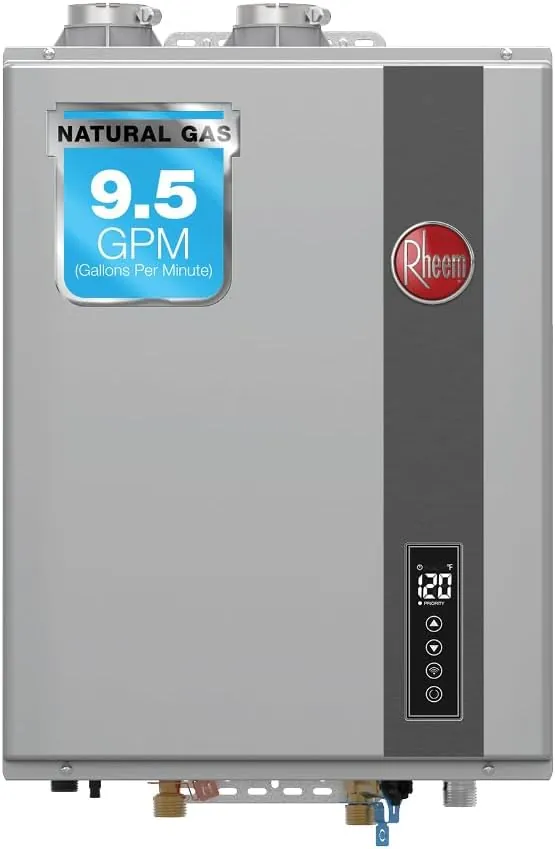
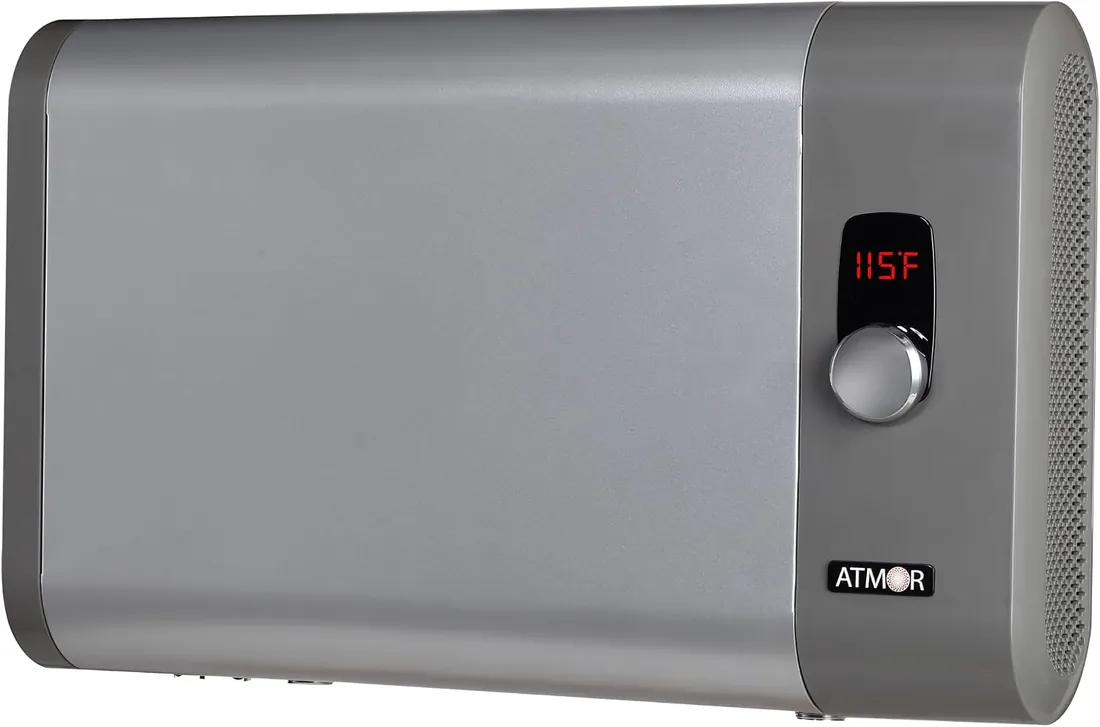
A heat pump water heater is a storage tank with a small heat pump on top; it moves heat from the room air into the water, so its UEF runs well above 1 (ENERGY STAR's draft criteria ask for 3.30 or more for integrated units). A tankless heater heats on demand, takes little space and never runs out, but delivers only the flow it can lift at your winter rise. The federal 25C tax credit of 30% up to $2,000 for ENERGY STAR heat pump water heaters covered products purchased and installed from 2023 through the end of 2025.
Side by side
| Heat pump water heater | Tankless | |
|---|---|---|
| How it heats | Heat pump moving room heat into a tank | Burner or elements, on demand |
| Sized by | First-hour rating vs your busiest hour | Flow at your winter rise |
| Space | A full-size tank with air around it | A wall-hung box |
| Install | Usually 240 V, condensate drain | Gas line and vent, or large electric circuits |
What A. O. Smith expects
A. O. Smith's 2025 annual report describes a DOE efficiency rule for residential water heaters taking effect in 2029 that seeks to rapidly increase adoption of heat pump water heating.
Size either one
Heat-pump planner (peak hour vs first-hour rating) and tankless planner (flow at your rise).